About
Meet the team behind one of the world’s most impactful dementia research programs
- Home
- About
- Latest news
- Meet the team behind one of the world’s most impactful dementia research programs
6 March 2026
Some of the most significant advances in Alzheimer’s disease research over the past few decades have relied on work done right here at Austin Health.
Austin Health is now the largest contributor of Alzheimer’s brain imaging data in the world. More than 5,000 amyloid PET scans and 2,000 tau PET scans completed here allow researchers to actually see the two proteins that cause Alzheimer’s disease in living people, information that is now used in research and drug trials across the globe.
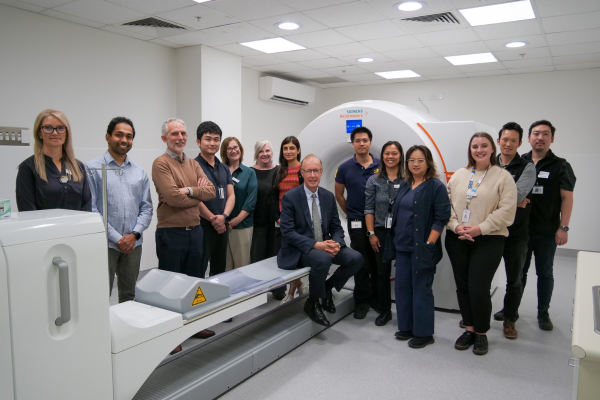
The scans performed at the Austin Hospital are used internationally to design drug trials, select participants for research studies, and inform the development of emerging blood tests that may transform how dementia is diagnosed. Leading this work is Professor Christopher Rowe, Director of Molecular Imaging Research, and a small, highly specialised team working behind the scenes.
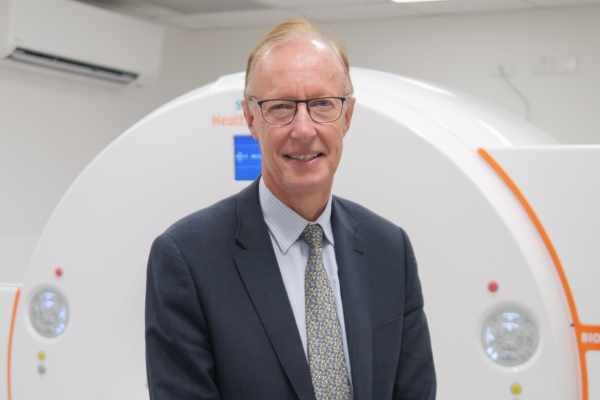
Before modern molecular imaging, Alzheimer’s disease could only be confirmed after death, with researchers relying on clinical signs rather than seeing the disease directly in a living brain.
Molecular imaging changed that.
Austin Health was the first site in Australia to install a cyclotron and PET imaging capability in 1992. This enabled Austin Health to be amongst the first few institutions in the world to begin amyloid plaque scanning to research Alzheimer's disease in 2004 and subsequently build a dedicated team and world leadership in dementia research.
Today, the team completes around 1,000 scans each year as part of local and international research programs. This work supports major global studies, helps identify participants for clinical trials of new Alzheimer’s therapies, and is now informing the development of blood tests designed to detect the disease earlier and less invasively.
Despite the scale of the contribution, the team itself is small. Around 13 staff work across radio chemistry, radio pharmacy, research nursing, data management and analysis, with collaboration from CSIRO analysts and research fellows. Together they manage a highly specialised program that has positioned Austin Health as a leader in molecular imaging for dementia.
Professor Rowe is regularly invited to present this work internationally and also leads the Australian Dementia Network, helping coordinate dementia research across the country. However, the true measure of Austin Health’s impact is the way this imaging data is now relied upon by researchers and clinical trial teams around the world.
Austin Health’s contribution has become fundamental to how Alzheimer’s disease is studied and tackled worldwide.