

About
Austin Health reaches 100 robotic surgeries milestone
- Home
- About
- Latest news
- Austin Health reaches 100 robotic surgeries milestone
26 February 2026
Austin Health has reached a major milestone in robotic surgery, performing its 100th procedure using the da Vinci Xi surgical robot just one year after introducing the technology.
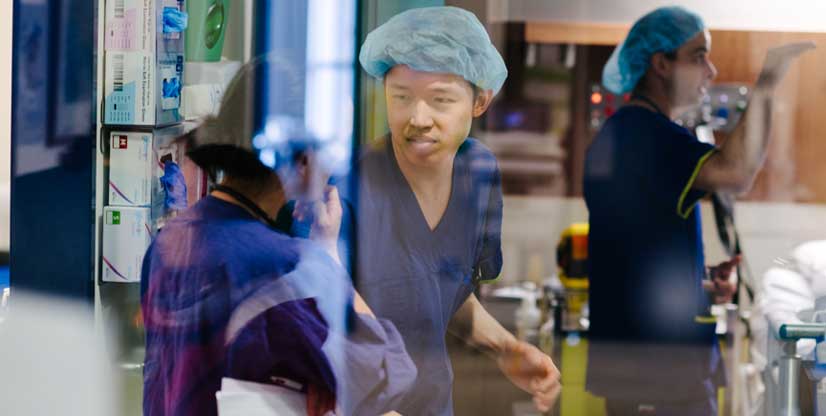
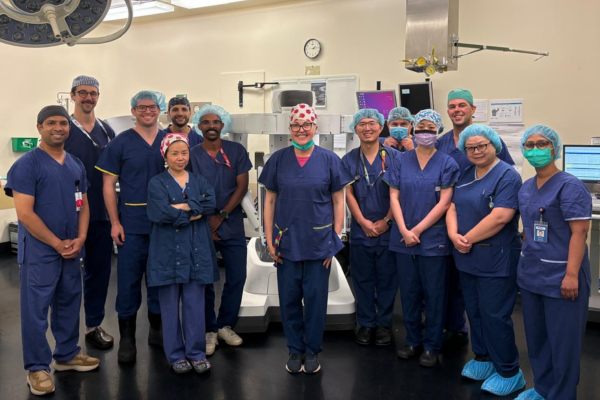
The milestone was recently marked in theatre, with surgical, nursing and technical teams coming together to celebrate how far the program has come since its first case in February 2025.
Since then, robotic surgery has quickly become an important part of care for patients undergoing complex urology and colorectal procedures, particularly for cancers of the prostate, bladder and kidney. The majority of the first 100 cases have been performed by Austin Health’s urology team.
Professor Damien Bolton, Urology Head of Unit, said the impact for patients has been significant.
“The Austin Health Robot Assisted Surgery program has been a huge success over its first 100 patients, with reduced time in hospital and quicker recovery for patients who can then return to their normal routine at home and at work much faster than was previously the case,” he said.
“After starting with prostate cancer surgery, we have been able to progress to bladder, bowel and kidney cancer procedures, including surgery to remove part of the kidney containing a cancer and preserve the remainder in patients with only one kidney, thus potentially avoiding dialysis.”
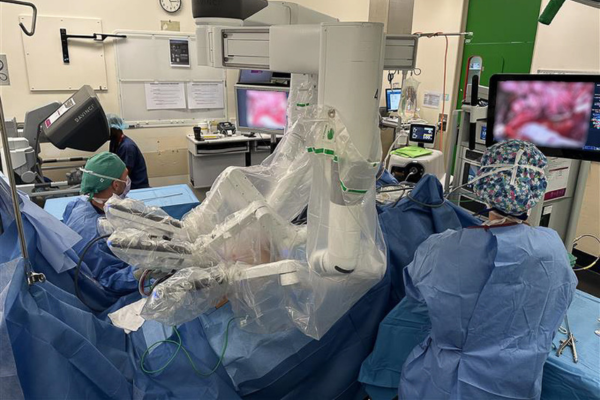
The da Vinci system does not operate independently. Surgeons control every movement from a console beside the operating table, using robotic arms equipped with tiny instruments and a high-definition 3D camera. The technology allows movements that are more precise than the human hand alone, helping surgeons work safely in small or difficult-to-reach areas.
A number of Austin Health surgeons are now credentialed to use the robot, supported by experienced theatre nurses, technicians and perioperative teams. The system also allows dual controls, enabling surgeons to train colleagues and expand robotic capability across the organisation.
For patients, the benefits can be significant. Robotic surgery uses smaller incisions than traditional open surgery, which can mean less pain, lower risk of infection and faster recovery. Some patients are able to return home sooner, in some cases as early as the next day.
Nicky Fernandes, Divisional Manager for Anaesthesia, Perioperative and CSSD Services, said the milestone reflected an enormous team effort.
“Since commencing the program in February 2025, we have worked tirelessly with our clinical teams to ensure the success of the program and the best possible outcomes for our patients,” she said.
“We are proud to be able to offer this minimally invasive approach at Austin Health, and we are pleased and excited to be expanding this offering to additional specialties as the program continues to grow.”
Cameron Goodyear, Deputy CEO and Chief Operating Officer said:
“Robotic surgery is fast becoming standard of care for some procedures across a variety of specialties and we are very pleased to be able to offer this to patients at Austin Health”
Robotic surgery is already well established internationally, and its introduction at Austin Health ensures patients in Melbourne’s north-east can access this advanced approach close to home. The program will continue to expand this year, with new specialties including thoracic surgery, Upper GI surgery and hepatopancreatobiliary (HPB) surgery, which focuses on the liver, pancreas and bile ducts. More surgeons will also undertake specialised training, further strengthening Austin Health’s robotic surgery capability and the care available to patients.
The milestone is a testament to the skill, dedication and collaboration of Austin Health’s surgical, nursing and perioperative teams, and reflects a shared commitment to improving outcomes and recovery for patients.