About
A paw-sitive first for ICU: Pet Therapy brings comfort to critically ill patients
- Home
- About
- Latest news
- A paw-sitive first for ICU: Pet Therapy brings comfort to critically ill patients
4 August 2026
For many people, spending time with a dog is a simple pleasure. But for patients in the Intensive Care Unit (ICU), it can be something much more powerful.
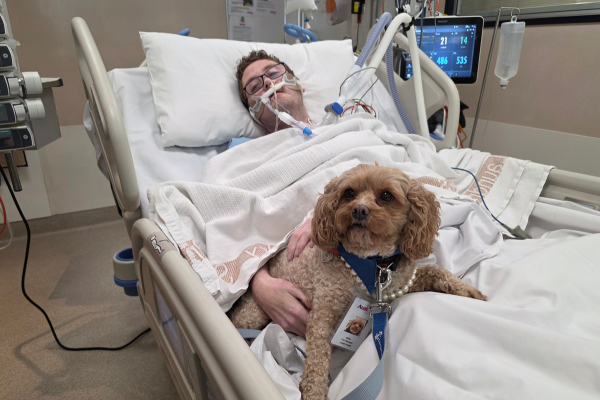
Last week, Austin Health marked a significant milestone with its first-ever Pet Therapy visit in ICU, bringing comfort and connection to patient Robert and his aunt, Leonie.
The visit followed months of planning and collaboration between numerous teams to safely introduce the much-loved program into one of the hospital's most complex clinical environments.
Volunteer Engagement Manager Jodi Batchelor said bringing Pet Therapy into ICU had been a true team effort.
"Bringing pet therapy into ICU required months of planning, meticulous risk assessment, extensive behind-the-scenes coordination and administration, robust infection prevention processes, and close collaboration between the Volunteer Engagement team, ICU clinicians and Lort Smith," Jodi said.
"Every detail - from selecting experienced volunteers already embedded within Austin Health's volunteer program to developing safe operational processes - was carefully considered before the first visit took place."
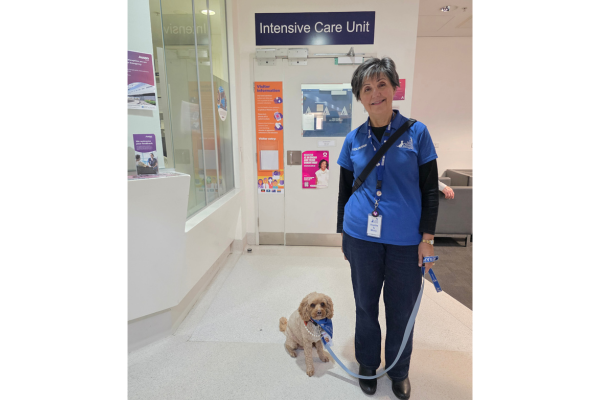
The inaugural visit saw Lort Smith therapy dog Molly and her owner Sophie visit ICU patient Robert. While the planning had taken months, the impact of the visit was immediate.
"As I walked behind Molly and Sophie, I watched people rise from their seats to see Molly trotting down the hallway. Smiles appeared on faces everywhere,” said Jodi.
"Seeking permission, Sophie carefully positioned Molly so the patient could hold her. Within moments everything changed. As he gently patted and held her, his body relaxed and the tension seemed to melt away. The joy in the room was palpable.”
"Nurses and doctors paused to watch the interaction, smiling as they quietly commented on how lovely it was to have a dog in ICU. Staff stopped to share stories about their own dogs, and people were laughing and smiling. In that moment, it felt as though something truly special had happened."
ICU Clinical Nurse Specialist Amy Capetola, who first approached the Volunteer Engagement team about introducing Pet Therapy into ICU, witnessed the transformation firsthand.
"I have been involved in Robert's care in ICU, and I really noticed a difference that morning," Amy said.
"He had started to become more unsettled and frustrated with his situation, but when Molly visited, he was instantly relaxed and completely captivated by her. It was amazing to see him smile.
"Leonie, Robert's aunt, has been by his side almost every day since he was first admitted to hospital back in May. She expressed how Molly and Sophie brightened her day too, as both she and Robert have been missing their two dogs back home in regional Victoria.”
"I think this was a perfect example of the positive impact of Pet Therapy."
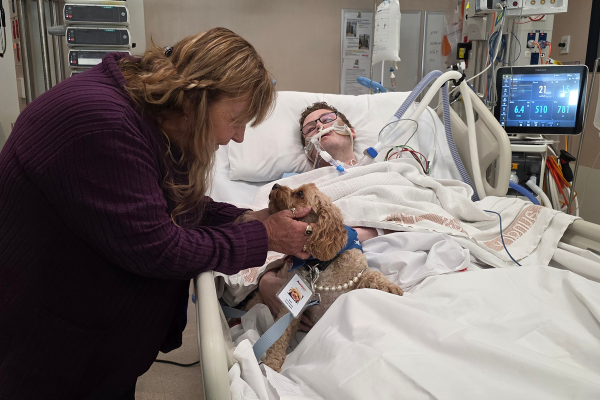
Research shows therapy dog visits in ICU can reduce anxiety, pain and feelings of loneliness for both patients and their families, while helping to create moments of calm and connection in what can often be a stressful environment.
ICU Nurse Unit Manager Tammie McIntyre said the first visit demonstrated exactly why the program is so valuable.
"ICU can be a stressful environment for patients and their families, and it was heartwarming to see the positive impact Molly had in helping to reduce anxiety, provide comfort, and create a welcome moment of calm and connection,” said Tammie.
"We look forward to bringing many more smiles through Austin Health's Pet Therapy program."
For Jodi, the visit was a reminder of the unique role volunteers play in supporting patients alongside clinical care.
"Volunteers have a unique ability to fill the space between practitioner and patient, offering comfort, connection and companionship alongside clinical care," she said.
"These are the moments that remind us of the power of volunteering.”