Clinics & services
Victorian Poisons Centre
Bites & stings
- Home
- Clinics & services
- Medical problems
- Victorian Poisons Centre
- Bites & stings
On this page
When to call 000
Call 000 and ask for an ambulance if these symptoms occur
- difficult noisy breathing or wheeze
- swelling of the tongue
- tightness in the throat
- difficulty talking or hoarse voice
- persistent dizziness and/or collapse
- an infant may be pale, floppy and not interacting normally
- In some cases, anaphylaxis is rapidly (< 1 hour) preceded by less dangerous allergic symptoms such as: swelling of face, lips or eyes; hives or welts; abdominal pain; vomiting
Ants
If you have had a serious reaction to an ant sting in the past
- Call 000 for an ambulance
- Administer your adrenaline (epinephrine) if you have been instructed to use it in this situation
- Lie down; do not stand or walk about
- Wait for the ambulance
If you haven't had a serious reaction to an ant sting in the past
- Wash the stung area with soap and water
- Apply a cold pack to the area and take a simple analgesic if required to relieve pain and swelling
- If there is persistent or severe swelling and/or itching, take an antihistamine for 1-3 days
- Antihistamines are available from pharmacies without a prescription. The pharmacist will be able to recommend one suitable for you
- See your doctor if the sting does not clear up in a few days or if it looks infected
Dangerous ants in Victoria
- Jumper or Jack Jumper Ant (Myrmecia pilosula)
- Bull or Bulldog Ant (Myrmecia pyriformis)
- Green-head Ant (Rhytidopenera metallica)
- "Blue Ant" (Diamma bicolor) (this is actually a type of wasp)
Bees
If you have had a serious reaction to a bee sting in the past/you are stung many times
- Remove the sting from the skin AS SOON AS POSSIBLE
- Call 000 for an ambulance
- Administer your adrenaline (epinephrine) if you have been instructed to use it in this situation
- Lie down; do not stand or walk about
- Wait for the ambulance
- If an adult has been stung more than 10 times, or a child more than 5 times, in a single incident, they should be taken to hospital.
If you haven't had a serious reaction to a bee sting in the past
- Remove the sting from the skin AS SOON AS POSSIBLE
- Wash the stung area with soap and water
- Apply a cold pack to the area and take a simple analgesic if required to relieve pain and swelling
- In most cases this will be the only treatment required, some people may have swelling that persists for a couple of days
- If there is persistent or severe swelling and/or itching, take an antihistamine for 1-3 days. Antihistamines are available from pharmacies without a prescription. The pharmacist will be able to recommend one suitable for you.
- See your doctor if the bite does not clear up in a few days or if it looks infected
Bees in Victoria
- European Honey Bee (Apis mellifera) stings are the cause of major problems
- Native Australian Bee stings only occasionally need medical attention.
Avoiding bee stings
- Avoid wearing bright clothes, especially on sunny days when bees are most active
- Don’t wear perfume as it may attract bees
- Remove clover from lawns as it attracts bees.
Blue-ringed octopus
The blue-ringed octopus is found in all Australian coastal waters. Bites from these creatures are usually as a result of handling them; they can inject highly toxic venom when they bite.
Blue-ringed octopus do not exhibit their characteristic blue rings except when they are disturbed.
Effects of the venom
Initially a person may not feel a bite. Then, within a few minutes, the person may feel tingling sensations in the tongue or lips and soon develop difficulty speaking or seeing. They may vomit and collapse within 10 minutes. Paralysis may cause breathing to stop.
First aid
Pressure bandage with immobilisation (PBI) is required to limit the movement of the venom from the area. This is similar to treating a snakebite.
- Apply a compression bandage over the bite, bandaging upwards from the lower portion of the bitten limb (see pressure bandage with immobilisation technique).
- Splint the limb. Keep the victim still. Bring transport to the victim.
- Call 000 for an ambulance.
- If breathing has stopped, begin Expired Air Resuscitation.
Caterpillars
A number of species of caterpillars can cause painful, itchy and inflamed skin reactions when hairs they shed become embedded in the victim’s skin.
Often the hairs are brittle and break away above the skin surface. These hairs can cause eye injury if they get into the eye.
First aid
- Decontamination:
- Remove hairs with tweezers or by applying and removing adhesive tape to the area.
- Seek medical attention immediately if there is stinging in the eye(s).
- Treatment:
- Apply a cold pack to the area and take a simple analgesic if required for relief of burning, pain and itching.
- Antihistamine medication or cortisone cream may be needed for persistent symptoms (ask your pharmacist or doctor).
- Seek medical attention immediately if there are caterpillar hairs in the eye(s).
Fish stings (including stingrays)
There are many fish in Australian waters that have venomous spines. Penetration of the skin by these spines causes a wound that requires medical attention because of the risk of infection and to update tetanus immunisation.
The usual immediate symptom is severe pain. In some cases it can be severe enough to cause shock.
The most dangerous fish in this group is the stonefish, which is not found in Victorian waters.
Examples of stinging fish in Victoria include: catfish, chained scorpionfish, cobblerfish, flathead, the fortescue, the goblinfish, gurnard perch or gurnard scorpionfish, the old wife (zebra fish), rabbit fish, rat fish, the red rock cod and stingrays.
First aid
- The best treatment for the severe pain is heat. The heat breaks down and inactivates the venom. Immerse the affected area in water that is hot enough to be effective but not hot enough to scald. It is best for someone other than the victim to test the water temperature. If no one else is present, the victim should test the temperature with a non-injured limb.
- Keep the affected area immersed in hot water until the pain is relieved or has subsided. The hot water may need to be topped up to maintain the pain relief. If no relief is obtained after 30-90 minutes, seek medical attention for alternative pain relief.
- Do not apply pressure/compression bandaging; this will increase the pain.
- Seek medical assessment immediately for cleaning of the wound, tetanus immunisation, pain relief, if required, and therapy to prevent infection.
Insects
For ant, bee, caterpillar and wasp stings see specific first aid information.
If you have been stung by an insect
- Wash the stung area with soap and water
- Apply a cold pack to the area and take a simple analgesic if required to relieve pain and swelling
- If there is persistent or severe swelling and/or itching, take an antihistamine for 1-3 days. Antihistamines are available from pharmacies without a prescription. The pharmacist will be able to recommend one suitable for you.
- See your doctor if the bite does not clear up in a few days or if it looks infected
Jellyfish
Dangerous jellyfish found in Australian waters include the box jellyfish (chironex fleckeri) and an array of jellyfish thought to cause the Irukandji syndrome, including carukia barnesi. These are not found in Victorian waters.
Jellyfish in Victorian waters rarely cause serious illness but can cause severe pain.
First aid
- Remove adherent tentacles by flooding area with sea water, picking off with gloved fingers or forceps or scraping them off with a firm implement (e.g. a credit card). Do not pick off with bare fingers.
- Apply cold packs and take a simple analgesic if required to relieve pain. For stings from Physalia species (Bluebottle or Portuguese man-o-war), immersion of the affected area in hot (not scalding) water is recommended. Immerse the affected area or shower in water that is hot enough to be effective, but not hot enough to scald. Do this for approximately 20 minutes. It is best for someone other than the victim to test the water temperature. If no one else is present, the victim should test the temperature with a non-injured limb.
- Antihistamine medication or cortisone cream may be required, ask your pharmacist or doctor.
Seek medical attention if the symptoms are severe.
Leeches
Leeches cause unwarranted fear in many people. When they latch onto skin, their bite is almost painless. They introduce an anticoagulant so that they can feed on the victim’s blood. When the leech becomes grossly swollen it falls off.
The symptoms from leech bite that may warrant medical attention are infected bite site and leech allergy.
First aid
- Remove the leech:
- Application of salt, salt water or vinegar to an actively sucking leech will cause it to fall off. A leech will usually fall off after 20 minutes of attachment without any treatment
- DO NOT pull the leech off as the skin may be torn and ulceration may follow or parts of the jaw may remain and set up infection. Applying heat to the leech (e.g. applying a hot coal or lit cigarette) may result in burns to the patient so is not recommended
- Treatment:
- After the leech has been removed, wash with soap and water
- Apply a cold pack and take a simple analgesic if required to relieve pain or swelling
- Apply pressure if there is bleeding from the bite
- Seek medical attention if the area becomes infected or if a wound or ulcer develops
Scorpions
The scorpions found in Australia are not considered dangerous, compared with the scorpions from South America. A scorpion sting may be painful and cause some redness and swelling. The main concern from a scorpion sting is the risk of the sting becoming infected.
First aid
- Wash the sting area with soap and water
- Apply a cold pack and take a simple analgesic if required for pain and swelling
- Seek medical attention if your tetanus immunisation is not up-to-date, if the area becomes infected or if the stung area has not cleared up within 2-3 days
Snakes
Dangerous snakes found in Victoria
- Tiger snake (the most common cause of snake envenoming in Victoria)
- Common or Eastern brown snake
- Copperhead snake
- Red-bellied black snake
There are other venomous snakes found in other parts of Australia.
All snake bites should be regarded as being dangerous. Identification of a snake is difficult and there are serious consequences of wrongly identifying a snake as non-venomous.
Bites from venomous snakes do not always cause illness; sometimes a snake will not be able to achieve an effective bite and may only scratch the victim.
Preventing snakebite
Most cases of snakebite can be avoided by following these simple rules:
- Leave snakes alone
- Wear adequate clothing and stout shoes (not sandals/thongs) in 'snake country'
- Never put hands in hollow logs or thick grass without prior inspection
- When stepping over logs, carefully inspect the ground on the other side
- Keep barns and sheds free of mice and rats, as they will attract snakes
- Keep grass well cut
First aid for snakebite
- Stay calm and call for help.
- Note: Do not wash the bite site. Traces of venom that are left on the skin can be tested to identify the snake group, and therefore the type of antivenom that may be indicated.
- Venom is injected deeply so there is no benefit in cutting or sucking the bite. A tourniquet is not an effective way to restrict venom movement.
- The most effective first aid for snakebite is the pressure bandage with immobilisation (PBI) technique. The principle is to minimise the movement of the venom around the body until the victim is in a hospital by applying a firm bandage (or suitable alternative) to the bitten area and limb. The bandage should be fitted as firm as if bandaging a sprained ankle. The bandage should not be tight enough to restrict blood flow to the arm or the leg. It should be possible to easily insert a finger under the bandage. If applied properly, this method can trap the venom in the bitten area. The victim might not suffer any effects of the venom until the pressure bandage is released, which can only be done in hospital where antivenom can be administered if required.
After the pressure bandage and splint are in place:
- Bring transport to the victim
- Keep the victim still
- Leave bandages in place until the victim has reached a medical facility.
Spiders
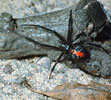
Redback spider (Latrodectus hasselti)
Medical treatment is NOT always required following a bite from a Redback Spider. Many bites will only cause a local reaction including pain, redness, swelling and heat. The treatment for these symptoms is to wash the bite area with soap and water, apply a cold pack and take a simple analgesic such as paracetamol. Application of a pressure bandage will not help; it may make the pain worse.
Medical attention is required for anyone with significant
- Pain not relieved by a cold pack and a simple analgesic such as paracetamol
- Pain spreading from the bite area
- Swollen or painful glands in the affected limb (armpits for bites on the arm or hand, groin for bites on the foot or leg)
- Sweating all over the body, or only in patches
- Shivering
- Tremors
- Stomach upset - nausea, vomiting, stomach cramps
- Increased heart rate
- Headache
- Pins and needles in hands or feet
- Secondary tissue infection
Victorian Funnel-Web spider (hadronyche modesta)
When the term 'funnel-web spider' is used, it is generally a reference to the dangerous spider atrax robustus, which is found in and around Sydney.
There are some related spiders in the funnel-web Spider family that are found in other parts of Australia, including Victoria. There are few case reports of people being bitten by the Victorian Funnel-Web spider.
Despite being a relative of the Sydney Funnel-Web spider, the venom from the Victorian Funnel-Web spider is only known to cause general symptoms such as headaches and nausea.
If you suspect that someone has been bitten by a Victorian funnel-web spider:
- Wash the bitten area with soap and water
- Apply a cold pack and take a simple analgesic if required to relieve pain and swelling
- Medical attention is only required if any symptoms such as significant nausea, headache or sweating develop in the next few hours, or if the bite does not clear up or if any signs of infection or tissue damage occur.
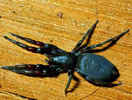
Other spiders
For other spider bites, the treatment is aimed at minimising pain and the risk of infection.
- Wash the bitten area with soap and water
- Apply a cold pack and take a simple analgesic if required to relieve pain and swelling
- Medical attention is only required if the bite has not cleared up in 2-3 days or if there are signs of infection or tissue damage
For most spider bites, this is all the treatment that will be required. Some spider bites may result in mild symptoms, including headache and nausea, but usually do not require any specific treatment.
This treatment is appropriate for bites from the white-tailed spider (lampona cylindrata). As for other spiders, medical treatment is only required if the bite has not cleared up in 2-3 days or if there are signs of infection or tissue damage.
White-Tailed spiders are very common and many people are bitten without any serious reaction. There is a common belief that white tail spider bites cause skin ulcers and tissue damage, but there is no good evidence to support this. The bite site may be painful; a red mark with associated itchiness, pain or lump may persist for up to 12 days. An antihistamine may help control any pain, swelling or itch. Antihistamines are available from pharmacies without a prescription. The pharmacist will be able to recommend one suitable for you.
Further reading
- Walker KL, Milledge GA. Spiders commonly found in Melbourne and surrounding regions. Royal Society of Victoria: Melbourne; 1992.
- Jensen R, Nimorakiotakis B, Carroll T, Winkel K. Australian venomous creatures first aid guide. First Ed. Melbourne: CSL Limited; 2007.
- Victorian Spiders: Museum Victoria
- Australian Museum: Spiders
Spider photographs are used with kind permission of Museum Victoria Entomology Department.
Ticks
Ticks attach themselves to humans or any warm-blooded animal in order to feed on the blood of their victim. They do not bite and leave; they remain attached until they are engorged with blood and are many times the size they were when they attached. Ticks will often detach themselves after 4 days.
Ticks can cause a range of illnesses. Some ticks found in the eastern parts of Australia can cause paralysis. All ticks can transmit infectious diseases and can cause infection of the bite site. Some people are allergic to ticks.
Where ticks are found
Ticks live in foliage such as long grass and attach themselves to warm-blooded animals as they brush against the foliage.
How to remove a tick
Effective removal of the whole tick is important. Use an ether-containing aerosol, eg Wart-Off Freeze Spray or Medi Freeze Skin Tag Remover, to freeze and kill the tick. It should be dead about 10 minutes after application of the aerosol. Then just brush away the remnants of the dead tick. If you are unable to remove the tick in this way, see your doctor. A thorough body check is important. Small larval ticks can be killed by applying a permethrin-containing cream, and then brushed off.
Many other tick removal techniques have been advocated over the years, but are no longer recommended. Attempting to remove a tick with forceps or tweezers can sometimes result in the tick’s head or mouthpiece remaining embedded in the host; these can be difficult to remove. The more a tick is handled, the greater the amount of toxin it will release. Holding a flame or hot match to the tick is also no longer recommended because of the risk of burning the host, and an agitated tick will release more toxin into the host.
First aid
After the tick has been killed and removed, wash the area and apply antiseptic and a bandaid or dressing
After removal, most tick bites resolve without problems. Seek medical attention:
- If there is any local rash or swelling
- If the area does not clear up
- If any signs of infection or tissue damage occur
- If you experience any symptoms such as feeling weak, unsteady on your feet, unusually sleepy, double vision, having difficulty breathing or swallowing or if any night sweats or fever develop. You may have an allergic reaction if bitten by a tick in the future. Rarely, people may develop an allergy to red meat products after being sensitised by a tick bite.
Wasps
If you have previously had a serious allergic or anaphylactic reaction to a wasp sting: You should consult your doctor about the need for you to carry adrenaline (epinephrine) for use in the event of a sting.
If you have been stung inside the mouth or throat: Call 000 for an ambulance.
If you have been stung by a wasp and have previously had a serious allergic or anaphylactic reaction to a wasp sting you should follow these steps:
- Call 000 for an ambulance
- Administer your adrenaline (epinephrine) if you have been instructed to use it in this situation
- Lie down; do not stand or walk about
- Wait for the ambulance
- If an adult has been stung more than 10 times or a child more than 5 times in a single incident, they should be taken to hospital.
If you have been stung by a wasp (but less than 10 stings in an adult and less than 5 stings in a child) and have NOT previously had a serious reaction to wasp sting you should follow these steps:
- Wash the stung area with soap and water
- Apply a cold pack to the area and take a simple analgesic if required to relieve pain and swelling
- If it was a European Wasp or if there is persistent or severe swelling and or itching, take an antihistamine for 1-3 days. Antihistamines are available from pharmacies without a prescription. The pharmacist will be able to recommend one suitable for you.
- See your doctor if the bite does not clear up in a few days or if it looks infected.
Wasps in Victoria
- Paper wasps (Polistes humulis, Polistes tasmaniensis)
- Blue ant (Diamma bicolor)
- European wasp (Vespula germanicus) - introduced species and is a significant menace. They can be aggressive if disturbed and cause a significant incidence of serious allergic or anaphylactic reactions.
- English wasp (Vespula vulgaris) - introduced species and is a significant menace. They can be aggressive if disturbed and cause a significant incidence of serious allergic or anaphylactic reactions.
Avoiding wasp stings
- Wasps may be attracted to sweet things like soft drink and hide inside a can of drink. Do not drink soft drink from a can when outdoors - always use a straw.
- Do not disturb a wasp nest, get expert advice for safe removal of a nest.
Pressure Bandage with Immobilisation (PBI) Technique
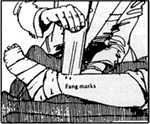
The PBI technique should be used for Blue-Ringed Octopus bites and snakebites. It should not be used for spider bites, fish or jellyfish stings, or bites/stings from ants, bees, caterpillars, centipedes, scorpions, wasps etc)
Note: Never wash a snake bite. Traces of venom that are left on the skin can be tested to identify the snake group, and therefore the type of antivenom that may be indicated.
Bites to the leg
1. Apply a broad (15 cm) pressure bandage over the bite site as soon as possible (do not take off clothing, as the movement of doing so will promote the movement of venom). Keep the bitten leg still.
Elasticized bandages are ideal, but any flexible material may be used. Clothing, towels etc. may be torn into strips. Panty hose have been successfully used.
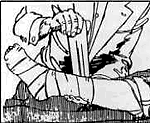
2. The bandage should be as tight as you would apply to a sprained ankle.
Note: Bandage upwards from the lower portion of the bitten leg. Even though a little venom is squeezed upwards the bandage will be far more comfortable, and therefore can be left in place for longer if required.
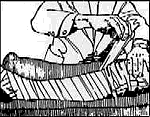
3. Extend the bandage as high as possible up the leg
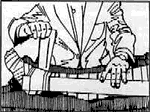
4. Apply a splint to the leg. Any rigid object may be used as a splint. e.g. spade, piece of wood or tree branch, rolled up newspapers etc.
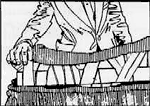
5. Bind the splint firmly to as much of the leg as possible
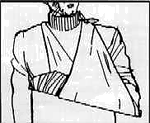
Bites on hand or forearm
- Bind to elbow with bandages
- Use splint to elbow
- Use a sling
- Immobilise the patient
Bites to the trunk
If possible apply firm pressure over the bitten area. Do not restrict chest movement.
Bites to the head or neck
No first aid for bitten area.
After the pressure bandage and splint are in place:
- Bring transport to the victim
- Keep the victim still
- Leave bandages in place until the victim has reached a medical facility.
If the bandages and splint have been applied correctly, they will be comfortable and may be left on for several hours. They should not be taken off until the patient has reached medical care.
The doctor will decide when to remove the bandages. If venom has been injected it may have an effect very quickly when the bandages are removed. The doctor should leave them in position until he or she has assembled appropriate antivenom and drugs that may have to be used when the dressings and splint are removed.
(Pressure bandage with immobilisation information reproduced with the kind permission of the Australian Venom Research Unit)